

When a Burn Scar Sheds a Storm, Vista Flood Restoration Is the Flood Response Alpine, CA Counts On
Immediate Response | At Your Site in 39 Minutes or Less | We Bill Your Insurance
Water is moving across your property and you have minutes, not hours, to decide what matters. Out here it arrives carrying mud, ash, and gravel. Runoff off a burned slope behaves nothing like a burst pipe indoors. Vista Flood Restoration stages in San Diego and heads east up the grade when Alpine storms turn.
We Are Here to Help
Fill up the form to get started
Alpine Floods From Above, Not From the Coast
Alpine has no tide and no river delta. What it has is elevation, chaparral slopes, and a fire history. Rain that would be a nuisance closer to the coast behaves differently here. Once it runs off bare ground upslope it carries mud and rock.
The terrain does the sorting. Water sheds off the ridges, concentrates in the canyons, and then finds the flattest thing in its path. Very often that flat thing is a driveway, a pad, or the low corner of a house. Properties that never had a water problem can take one after a single fire season changes the hillside above them.
Infrastructure out here is thinner than in the suburbs. Many Alpine parcels drain through private culverts and dirt shoulders rather than engineered storm drains. When a culvert plugs with ash and branches, the water does not queue politely. It jumps the road and runs wherever the grade takes it.
Utilities compound it. Homes on well and septic can lose safe water and safe drainage in the same storm. Floodwater that reaches a wellhead or backs into a leach field turns a cleanup into a health question. That changes the whole scope of the job.

The Rainfall Numbers That Actually Matter Around Alpine
These thresholds come from the US Geological Survey and CAL FIRE incident records.
- In southern California, as little as 0.3 inches of rain in 30 minutes has triggered debris flows off burned ground¹. That is a brief cell, not a named storm.
- Any storm with intensity above roughly 0.4 inches per hour carries debris-flow risk in a burned basin². Fire reduces how fast soil can absorb water at all.
- Elevated runoff can persist for several years after a fire³. Debris flows themselves rarely occur beyond the second rainy season, and the first one is usually the worst.
- The 2018 West Fire burned 504 acres right at I-8 and West Willows Road⁴. A footprint that size changes how the slope above it sheds every winter that follows.
The Second Storm Is the One That Finds the Damage
A property that shed the first storm has often lost the grading, the culvert capacity, or the vegetation that protected it. The next system arrives to a weaker site. Getting the water path corrected between storms is what stops a wet week from becoming a structural repair.
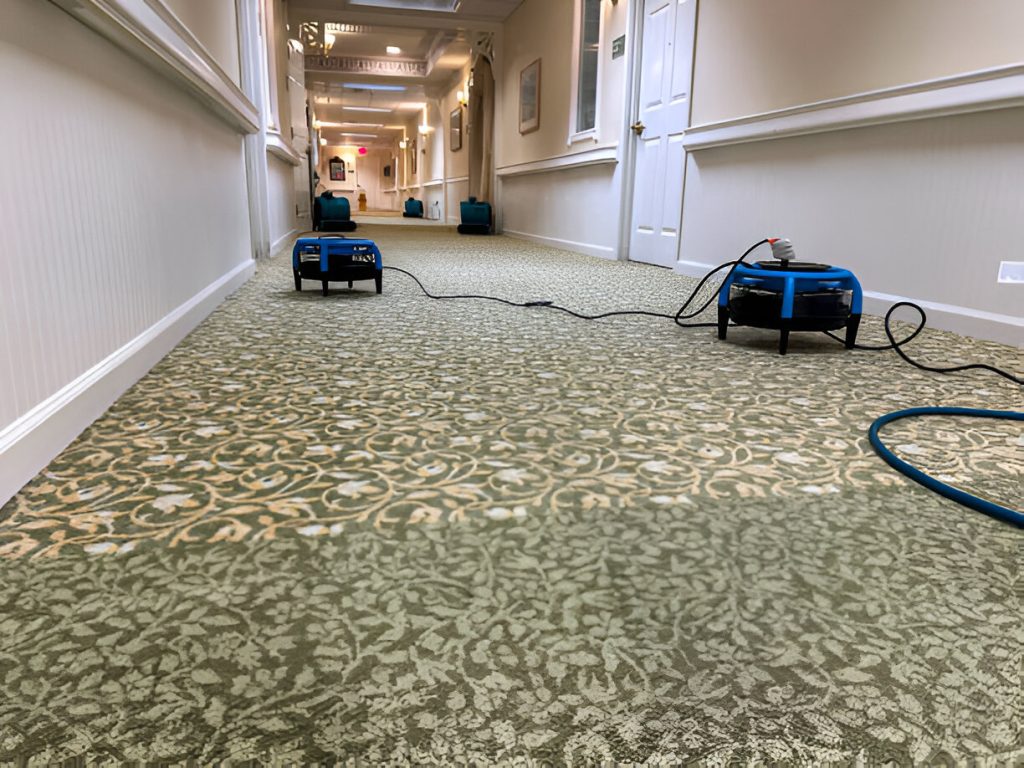

24-Hour Emergency Flood Response
What Flood Response Looks Like on an Alpine Property
Storm work here starts outdoors and moves in. The water is usually still arriving when we get there, so stopping the path matters before anything gets dried.

Reaching the Property When the Road Is the Problem
Storm callouts up the grade often mean flooded shoulders, downed limbs, and washed-out dirt access. We plan a route and a backup before dispatch, because a blocked culvert can close a driveway entirely. Getting there is a real part of the job in this terrain.

Cutting Off the Water Still Coming In
Extraction is pointless while the slope above is still feeding the house. We divert, dam, and re-open the drainage path first so the inflow stops. Only then does the inside work start.
Getting the Mud and Ash Out Before Any Drying
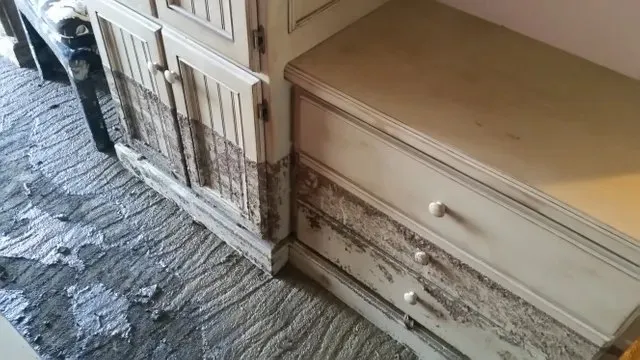
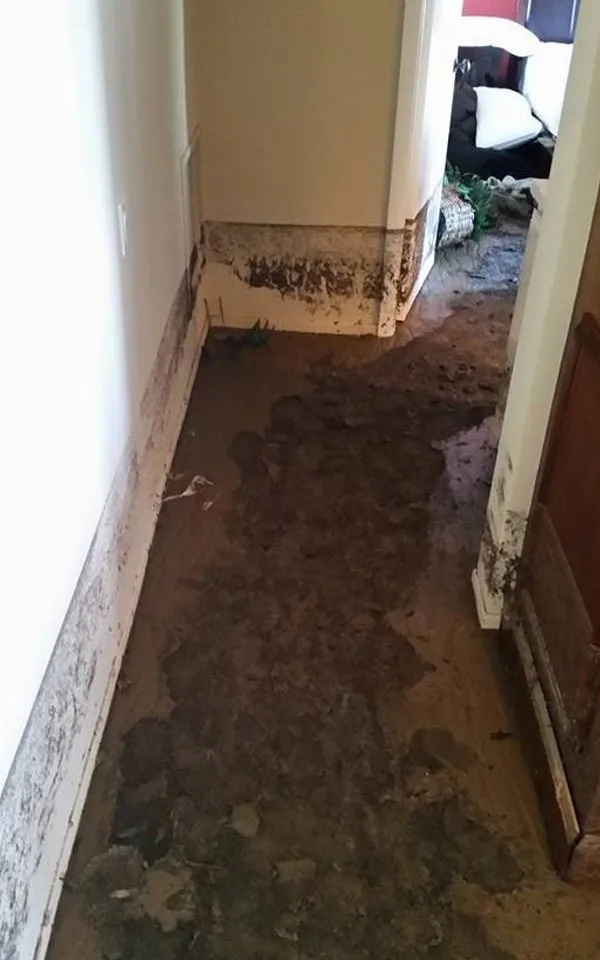
Runoff off a burn scar is not clean water, and drying equipment cannot fix silt. Solids have to come out of carpet, subfloor, and crawl space before air movers do anything useful. Skipping that step just bakes grit and odor into the assembly.

Checking the Well and the Septic Field
Floodwater near a wellhead or a leach field is a contamination question, not a moisture question. We flag those systems early so testing and any county involvement start on day one rather than late in the claim.
From sudden pipe bursts to fire and mold — we're here to restore peace of mind.
Our Trusted Results
See What our clients are saying
Signs an Alpine Property Needs Flood Response
Storm damage here rarely looks like a burst pipe. The signs tend to show up outside first, then work their way into the building.
The Water Line Is Brown, Not Clear
A silt or ash tide mark means the water carried solids from upslope. That changes the cleanup entirely, because the residue keeps producing odor and staining long after things feel dry.
A Culvert or Driveway Shoulder Blew Out
Washed gravel and a cut channel across the drive mean the drainage path failed under load. Whatever the water did to the road, it did something similar wherever it reached the structure.
Floors Cup or Lift Days After the Storm
Wood that took storm water often looks fine at first and moves later. Cupping or lifting a few days on means moisture is still sitting in the subfloor.
The Well Ran Cloudy After the Rain
Turbid or off-tasting water after a storm can mean surface runoff reached the wellhead. That is a health issue, and it needs testing rather than a wait-and-see approach.
Standing Water Under the House
Crawl spaces on sloping Alpine lots collect what the grade delivers and then hold it. Water sitting under the floor keeps feeding humidity into the rooms above until it is pumped and dried.


Why Alpine Property Owners Call Us for Storm Work
Storm response is judged on the first few hours. What matters is whether the crew arriving understands this terrain.
Storm Callouts Along the I-8 Grade to Alpine
We run this route in weather, not just on clear days. Knowing which approaches flood first means we plan around them instead of discovering them.
Built for Mud-Laden Alpine Runoff, Not Clean Spills
Our storm scope assumes solids in the water from the start. That means extraction, muck-out, and disposal are planned together rather than added once someone notices the silt.
Well and Septic Aware on Alpine Parcels
We treat off-utility properties as their own category of loss. Wellheads and leach fields get flagged early, because those findings change both the safety plan and the paperwork.
The Same Crew That Handles Alpine Fire Losses
Burn scars and storm runoff are the same problem a season apart. Working both sides means we already know which slopes above Alpine shed water once the brush is gone.
Where the Water Goes Around Alpine
Flood exposure in Alpine tracks the grade rather than the address. A few patterns repeat across the community.
- Canyon-bottom parcels. These sit where several slopes converge, so they take the combined volume of everything above them. Depth builds fast here even in a short, sharp cell.
- Slopes below old burn footprints. Ground that lost its brush sheds water instead of absorbing it. Properties downhill of a burn scar see runoff arrive earlier and dirtier than they used to.
- West Willows Road and the I-8 frontage. The 2018 West Fire started right at this junction, and the corridor still funnels both traffic and storm water. Access here can close and reopen within a single storm.
- Tavern Road properties. This is the community spine, and the roadside drainage carries a lot of what comes off the surrounding ground. Blocked inlets here push water onto adjacent lots quickly.
- The Viejas side. Parcels toward Viejas back onto open country with little engineered drainage between them and the hills. What the slope sheds arrives essentially unmanaged.
Alpine Storm and Flood Questions
These come up on nearly every Alpine storm call. Anything about your specific parcel needs eyes on the ground.
Why does a burned hillside flood my property?
Fire reduces how quickly soil can absorb water, so rain runs off instead of soaking in. The USGS has recorded debris flows in southern California from as little as 0.3 inches of rain in 30 minutes. Ground that never shed water before can start doing it after one fire season.
How long does that elevated risk last?
Runoff stays elevated for several years while vegetation returns. Debris flows themselves are unusual beyond the second rainy season after a fire. The first winter is generally the one to plan around.
How fast do I need to act once water is inside?
Quickly, and faster than with clean water. Storm runoff carries silt and organic material that starts breaking down immediately. Waiting turns an extraction job into a demolition and rebuild job.
Can I clean up Alpine floodwater myself?
A small clear-water intrusion is sometimes manageable. Water that came off a slope with ash, mud, or septic involvement is not. That is a contamination problem rather than a wet-carpet problem.
My well ran dirty after the storm. Is that related?
It often is. Surface runoff reaching a wellhead can introduce sediment and bacteria, and that needs testing rather than a wait-and-see approach.
GET A FREE ESTIMATE
BY FILLING OUT THE FORM BELOW

How can we help you?
We Have Seen What This Terrain Does With a Storm
We have worked enough East County storm calls to recognise the patterns. A canyon-bottom lot taking the volume of three slopes behaves one way. A parcel below an old burn footprint behaves another. Either way the questions are the same. Where is the water still coming from? What did it carry in, and what has to come out before drying starts?
If water reached your property, start with a site visit. Request an estimate or talk to our team. We will walk the grade with you and tell you what actually needs doing.
See also: Water damage restoration in Alpine and every area we serve across San Diego County.

