

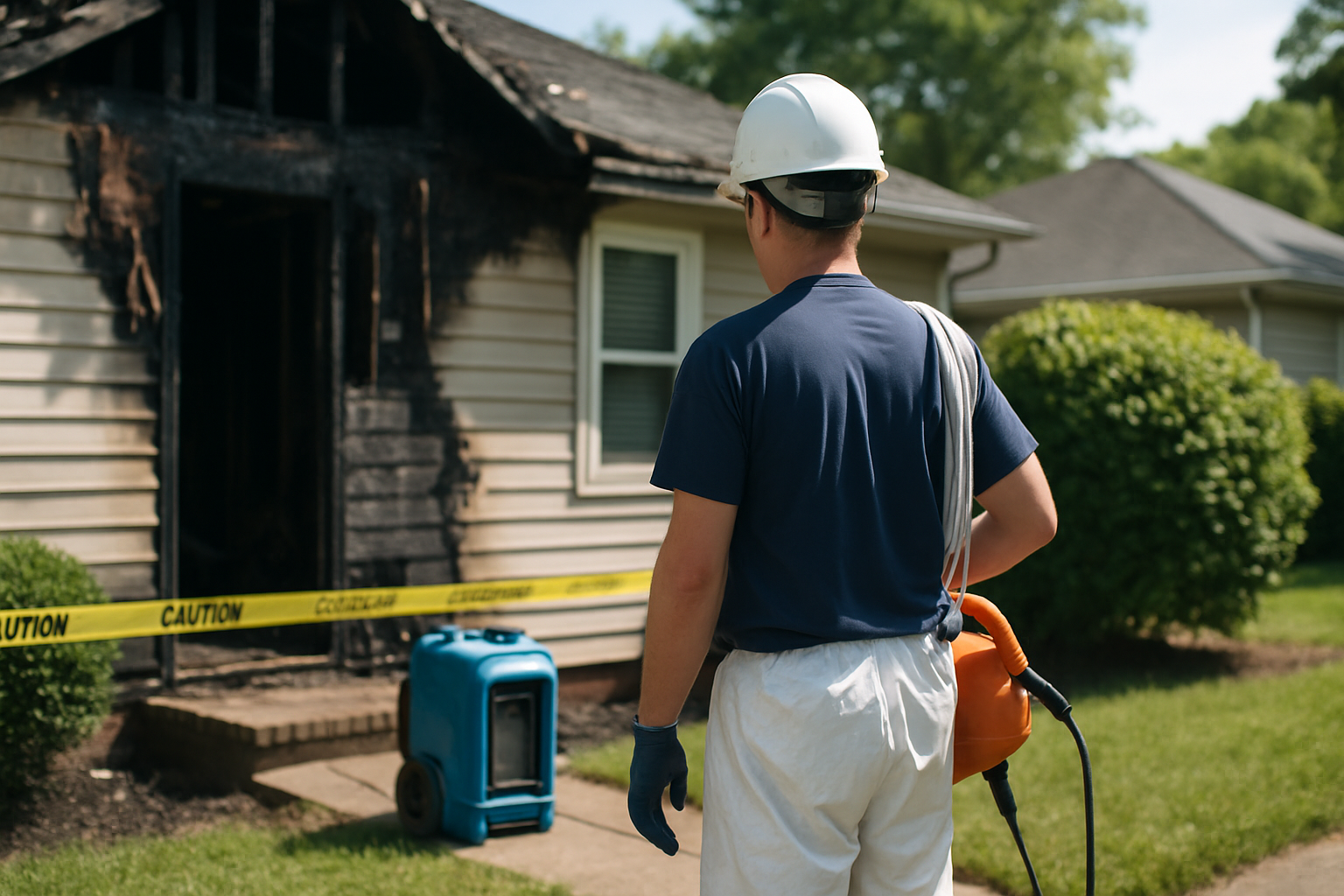
A house fire leaves behind far more than charred walls. Smoke, soot, and firefighting water all damage a home together. Restoration is a step-by-step process, not a single quick cleanup. This guide walks San Diego homeowners through fire and smoke damage restoration.
Key Takeaways
- ›Fire restoration tackles smoke, soot, and firefighting water together.
- ›Fast board-up, drying, and soot removal prevent further damage.
- ›Odor neutralization and reconstruction finish the recovery.
Step 1: Emergency Response and Assessment
Restoration starts the moment the fire is out. A crew inspects the home to map every type of damage. A team like Vista Flood checks the structure for safety first. They document everything for your insurance claim. This assessment shapes the entire recovery plan.
Step 2: Board-Up and Roof Tarp
An open, damaged home is vulnerable to more loss. Fire often leaves broken windows and holes in the roof. Crews board up openings and tarp the roof fast. This keeps out rain, wind, and intruders. Securing the home protects what the fire did not destroy.
Step 3: Water Removal and Drying
Firefighting leaves a home soaked in water. Thousands of gallons can flood the structure during a fire. Crews extract standing water and set up drying equipment. Left wet, the home grows mold within days. Drying is an early and critical restoration step.
Step 4: Smoke and Soot Removal
Soot and smoke residue coat every surface after a fire. That residue is acidic and keeps damaging materials over time. Crews clean walls, ceilings, and contents with specialized products. The American Red Cross guidance on cleaning up after a fire describes safe methods for removing soot. Fast, thorough cleaning limits permanent staining.
Step 5: Odor Neutralization
Smoke smell hides deep in a home after a fire. Odor soaks into drywall, framing, and fabrics. Surface cleaning alone will not remove it. Pros use thermal fogging and hydroxyl or ozone treatment. This neutralizes the smell at its source, not just the air.
Step 6: Cleaning, Sanitizing, and HVAC
A thorough clean reaches beyond the visible surfaces. Crews HEPA-vacuum and wipe down every affected area. The HVAC system gets cleaned so it stops spreading soot. Salvageable contents are cleaned and deodorized. This step restores the home to a safe, livable state.
Step 7: Structural Repair and Reconstruction
The final phase rebuilds what the fire destroyed. Crews replace burned framing, drywall, and flooring. Paint, trim, and fixtures bring the home back. A final walkthrough confirms the work is complete. Reconstruction turns a damaged house back into a home.
Fire Damage and Your Insurance
Most fire damage is covered by homeowners insurance. Document every room and item with photos before cleanup. Keep receipts for lodging and emergency repairs. The Insurance Information Institute guide to recovering from a fire explains how to recover after a fire. A restoration company can help you build the claim.
Why Soot Is So Damaging
Soot is more than a black smudge. It is acidic and etches glass, metal, and finishes. The longer it sits, the more permanent the staining. Fast removal saves surfaces and belongings.
The Water Damage a Fire Leaves Behind
Fire and water damage arrive together. Hoses pour thousands of gallons into the home. That water soaks drywall, floors, and framing. Drying it out prevents a second disaster.
How Pros Neutralize Smoke Odor
Masking the smell is not the same as removing it. Thermal fogging reaches where the smoke traveled. Hydroxyl and ozone break down odor molecules. The goal is true removal, not a cover-up.
Do Not Touch Soot Before the Pros Arrive
Wiping soot yourself can make it worse. Rubbing grinds the residue deeper into surfaces. It also spreads acidic particles to clean areas. Leave heavy soot to trained crews.
The Role of Board-Up and Tarping
Securing the home is an urgent first move. Open windows and roof holes invite rain and theft. A fast board-up and tarp seal the structure. It protects what the fire did not reach.
Cleaning the HVAC After a Fire
Your ductwork can spread soot for weeks. Running the system pushes residue into every room. Filters clog and need replacing right away. Duct cleaning stops the recontamination.
What Can and Cannot Be Salvaged
Not everything survives a house fire. Charred structural materials must be replaced. Many contents can be cleaned and deodorized. A crew sorts what is worth saving.
Documenting Fire Damage for Insurance
Records make your claim far smoother. Photograph every room before any cleanup begins. Save receipts for lodging and emergency work. Detailed documentation supports a fuller payout.
Health Risks of Smoke Residue
Smoke damage is a health issue, not just cosmetic. Fine soot particles irritate the lungs and eyes. Lingering residue affects indoor air quality. Proper cleaning protects your family’s health.
Structural Repairs After a Fire
Some fires reach the bones of the home. Burned framing and subfloor lose their strength. These must be replaced, not just covered up. Sound structure comes before any finishing.
Why Speed Matters After a Fire
Every hour of delay adds to the damage. Soot etches deeper and water breeds mold. Fast response keeps the restoration smaller. It also lowers the total cost of recovery.
Contents Cleaning and Pack-Out
Your belongings get their own recovery process. Crews can pack out items for off-site cleaning. Specialized methods restore clothing and electronics. Each item is tracked and returned when ready.
Frequently Asked Questions
1.How long does fire damage restoration take?
2.Can smoke damage be fully removed?
3.Is water damage part of fire restoration?
4.Should I clean up fire damage myself?
Fire or Smoke Damage in Your San Diego Home? Start the Recovery
Fire damage only worsens as soot and water sit. A fast, professional response saves more of your home. Vista Flood helps San Diego homeowners recover after a fire. Our fire damage restoration team handles soot, smoke, and odor. And our water damage restoration crew dries the water the firefighting left behind.
